

Peter Lynch
One Up on Wall Street:
Lynch explains how average investors can use their everyday knowledge to spot investment opportunities before Wall Street. He introduces his "invest in what you know" philosophy, teaching readers to leverage personal observations to find promising companies and how to research them properly before investing.
Beating the Street:
This follow-up provides detailed stock selection strategies with case studies from Lynch's Magellan Fund management. He shares his "twenty golden rules" for investing and emphasizes hands-on research for individual investors, showing how to apply professional techniques to personal portfolios.
Learn to Earn:
Co-authored with John Rothchild, this beginner-friendly book covers the history of capitalism, stock market basics, and foundational personal finance concepts. It's designed as an entry point for new investors to understand the financial world and build wealth over time.
Guy Spier
The Education of a Value Investor:
Spier shares his transformation from a Gordon Gekko wannabe to a thoughtful investor. He details his journey after a famous lunch with Warren Buffett, explaining how he developed his investment strategy and ethical framework. The book focuses on creating the right investment environment, building good decision-making habits, and learning from mistakes.
Howard Marks
The Most Important Thing:
Marks distills investment wisdom into crucial concepts including second-level thinking, market efficiency, value, and risk assessment. Through his famous memos, he explains how successful investing requires understanding market psychology and having the discipline to act against the crowd.
Mastering the Market Cycle:
This book focuses on how market cycles work and why understanding them is essential for investment success. Marks explains how to recognize cycle patterns, what drives them, and how investors can position themselves accordingly without attempting perfect timing.
Bull Market Rhymes:
Marks examines historic market cycles and how they repeat with variations, providing a framework for navigating different market environments. He analyzes how investor psychology drives market extremes and offers practical wisdom for maintaining discipline during both bull and bear markets.
Mohnish Pabrai
The Dhandho Investor:
Pabrai adapts the business principles of Gujarat immigrants (Dhandho = "endeavors that create wealth") into nine investing principles. He emphasizes a concentrated, low-risk/high-uncertainty approach to value investing, focusing on businesses with simple models and large margins of safety.
Mosaic: Perspectives on Investing:
A collection of Pabrai's essays on investment philosophy and strategy, focusing on long-term, concentrated value investing. He discusses cloning successful investors' ideas, avoiding common pitfalls, and developing the right temperament for investing success.
Aswath Damodaran
Investment Valuation:
A comprehensive guide to valuation methods for virtually any type of asset. Damodaran provides detailed frameworks for discounted cash flow analysis, relative valuation, and contingent claim approaches with practical applications.
Damodaran on Valuation:
Focused specifically on security analysis, this book explains how to apply different valuation models to various types of investments. It provides practical tools for determining the value of companies across different industries.
The Dark Side of Valuation:
Addressing the challenges of valuing difficult-to-value companies like tech firms, startups, and distressed businesses. Damodaran provides modified approaches when traditional metrics don't work well.
The Little Book of Valuation:
A concise guide making valuation accessible to non-experts. Damodaran simplifies complex concepts while maintaining their integrity, helping investors understand the fundamentals of determining what assets are worth.
Narrative and Numbers:
Explores how to combine qualitative stories with quantitative analysis in valuation. Damodaran shows how effective valuation requires both compelling narratives about a company's future and the numbers to support that story.
Charlie Munger
Poor Charlie's Almanack:
A collection of Munger's speeches and writings compiled by Peter Kaufman. The book presents Munger's multidisciplinary "latticework of mental models" approach to decision-making and his insights on psychology, business, and life. It includes his famous "Psychology of Human Misjudgment" speech and lessons from his long investing career.
Pat Dorsey
The Five Rules for Successful Stock Investing:
Dorsey, former director of equity research at Morningstar, presents a framework for finding quality companies at reasonable prices. He emphasizes understanding business models, competitive advantages, financial statement analysis, and valuation basics.
The Little Book That Builds Wealth:
Focuses entirely on economic moats (sustainable competitive advantages). Dorsey explains different types of moats including intangible assets, switching costs, network effects, and cost advantages, helping investors identify businesses that can maintain high returns on capital.
Ben Graham
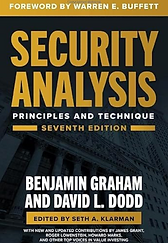
Security Analysis:
Co-authored with David Dodd, this foundational text established the framework for value investing. It teaches investors how to analyze financial statements, assess business quality, and find securities trading below their intrinsic value. Despite being written in the 1930s, its principles remain relevant for fundamental analysis.
The Intelligent Investor:
Graham's masterpiece for individual investors introduces the concept of "Mr. Market" and "margin of safety." He differentiates between defensive and enterprising investors, emphasizing rational analysis over emotional reactions to market movements. Warren Buffett called it "the best book about investing ever written."
The Interpretation of Financial Statements:
A straightforward guide to understanding company financial reports. Graham walks through balance sheets, income statements, and financial ratios, teaching investors how to spot red flags and identify true financial strength.
Phil Fisher
Common Stocks and Uncommon Profits:
Fisher introduces his growth-oriented investment philosophy based on qualitative factors. He presents his famous "15 Points to Look for in a Common Stock" and "scuttlebutt method" of research—gathering information from customers, suppliers, and competitors. This book influenced Warren Buffett's evolution beyond pure Graham-style value investing.
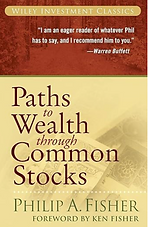
Paths to Wealth Through Common Stocks:
Expands on Fisher's investment approach with additional insights on finding exceptional growth companies. He discusses how to identify businesses with sustainable competitive advantages and strong management that can deliver long-term returns.
Conservative Investors Sleep Well:
Focused on risk management, this book explains how to build a portfolio that provides both appreciation potential and peace of mind. Fisher demonstrates that truly conservative investing doesn't mean avoiding stocks but rather owning the right kinds of companies.
Developing an Investment Philosophy:
Fisher outlines how investors should create and refine their personal investment frameworks. He emphasizes the importance of continuous learning, adapting to changing market conditions, and maintaining discipline during market volatility.
Michael Lewis
The Big Short: Inside the Doomsday Machine:
Focused on the 2008 financial crisis, this book explains how a handful of eccentric investors recognized the catastrophic fragility hidden within the U.S. housing market and mortgage-backed securities. Lewis demonstrates that the greatest investment opportunities sometimes emerge not from finding undervalued assets but from identifying widespread delusion masquerading as conventional wisdom—and having the conviction to bet against it when virtually everyone, including the experts, insists you're wrong.
John Templeton
Global Investing: The Templeton Way
Focused on the principles of international diversification, this book explains how investors can achieve superior returns by searching for bargains across borders rather than limiting themselves to domestic markets. Templeton demonstrates that true value knows no nationality—that the best opportunities often exist in overlooked or unfashionable markets where fear and unfamiliarity create mispricings invisible to those confined by geographic bias or home-country comfort.
The Templeton Plan: 21 Steps to Personal Success and Real Happiness
Focused on the spiritual and practical principles underlying a fulfilling life, this book explains how genuine success encompasses far more than financial achievement. Templeton demonstrates that lasting prosperity flows from cultivating virtues like thrift, gratitude, and service to others—principles that guided both his legendary investment career and his pursuit of meaning beyond material wealth.
Discovering the Laws of Life
Focused on universal ethical and spiritual principles, this book explains how timeless wisdom traditions from across cultures share common truths about human flourishing. Templeton demonstrates that these "laws of life"—humility, perseverance, honesty, and love—function as reliably as physical laws, producing predictable results when consistently applied to daily decisions and long-term aspirations.
Worldwide Laws of Life: 200 Eternal Spiritual Principles
Focused on an expansive collection of moral and spiritual insights, this book explains how principles drawn from philosophy, religion, and practical experience can serve as a guide for character development. Templeton demonstrates that wisdom is humanity's most valuable inheritance, and that systematically studying these eternal truths equips individuals to navigate life's challenges with integrity and purpose.
The Templeton Touch
Focused on John Templeton's investment methodology and personal philosophy, this book explains how faith, contrarian thinking, and rigorous analysis combined to produce one of the twentieth century's most remarkable track records. Proctor demonstrates that Templeton's success stemmed not from secret formulas but from buying at the point of maximum pessimism, maintaining global perspective, and integrating spiritual conviction with intellectual humility.
Investing the Templeton Way
Focused on applying John Templeton's bargain-hunting principles to modern markets, this book explains how to identify undervalued securities across global markets using the methods that made Templeton a pioneer. The authors demonstrate that disciplined value investing requires emotional detachment, thorough research, and the courage to act decisively when others are paralyzed by fear—lessons as relevant today as when Templeton first deployed them.
Warren Buffet
The Snowball: Warren Buffett and the Business of Life
Focused on the life and investment philosophy of Warren Buffett, this book explains how the world's most successful investor built his fortune through patience, discipline, and an unwavering commitment to understanding what he owns. Schroeder demonstrates that exceptional wealth creation isn't about complex strategies or market timing but rather about compounding knowledge and capital over decades—letting the snowball roll downhill, gathering mass slowly at first, then with unstoppable momentum.
The Essays of Warren Buffett: Lessons for Corporate America
Focused on Buffett's shareholder letters organized thematically, this book explains his views on corporate governance, accounting, valuation, and the obligations management owes to owners. Cunningham demonstrates that Buffett's genius lies not only in picking stocks but in articulating a coherent philosophy of business ownership—one where integrity, transparency, and long-term thinking create enduring value for all stakeholders.
Warren Buffett's Ground Rules: Words of Wisdom from the Partnership Letters, 1956-1970
Focused on the early partnership years before Berkshire Hathaway, this book explains how a young Buffett developed the principles and practices that would define his career. Miller demonstrates that Buffett's foundational approach—emphasizing alignment of interests, realistic expectations, and honest communication with partners—established the blueprint for outperformance long before he became a household name.
The Warren Buffett Portfolio: Mastering the Power of the Focus Investment Strategy
Focused on concentrated investing rather than broad diversification, this book explains how Buffett achieves superior returns by placing substantial capital behind his highest-conviction ideas. Hagstrom demonstrates that focus investing requires not only identifying exceptional businesses but also possessing the temperament to hold them through volatility—recognizing that true risk comes from not knowing what you own rather than from owning fewer positions.
.